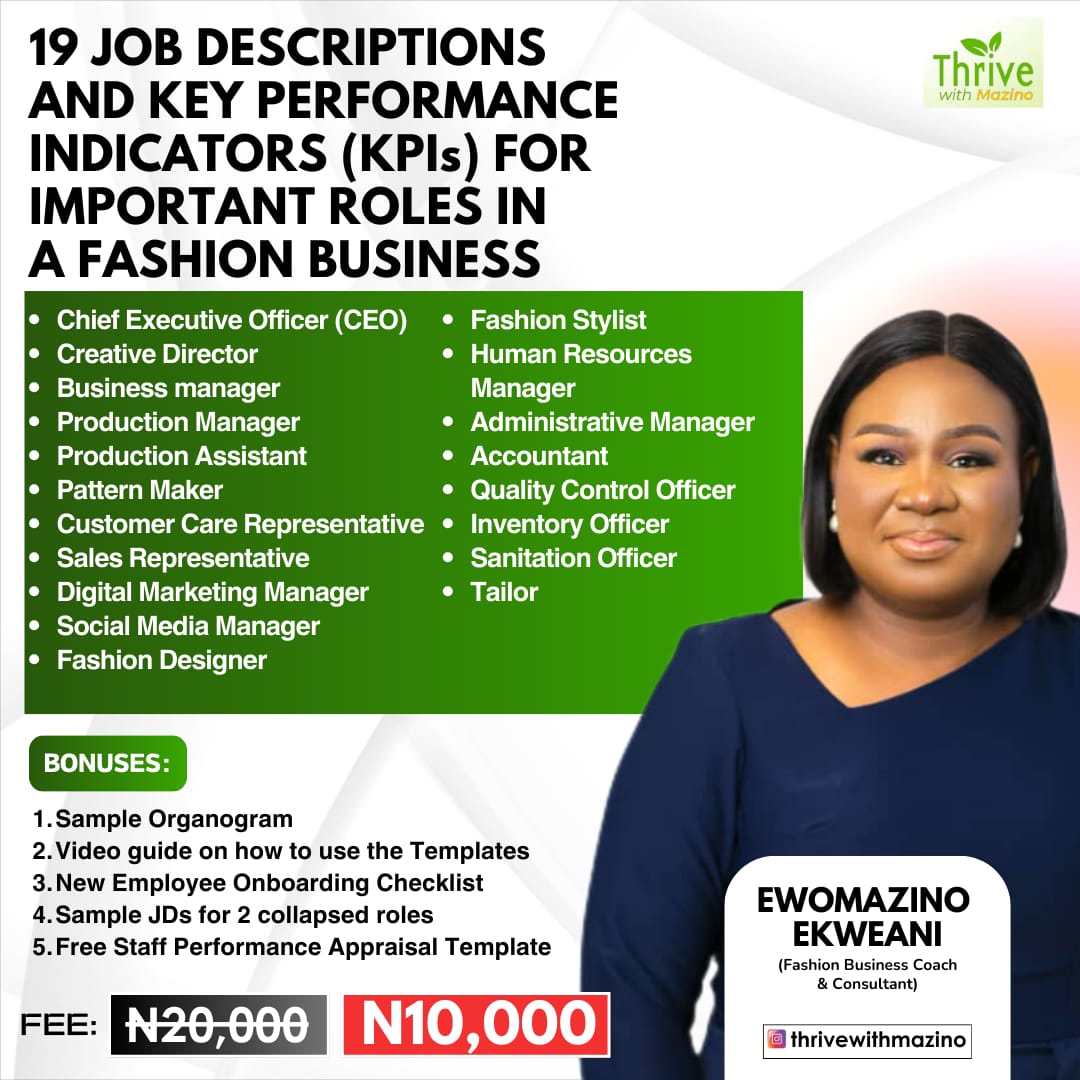
19 Job Description Documents
JOB DESCRIPTION AND KPIs
Do you want to attract qualified applicants?
Do you want your employees to understand what is expected of them?
Do you want enhance performance and productivity in your business?
Then you need clear and concise Job Descriptions and Key Performance Indicators for the relevant roles in your business!
A Job Description is a detailed document that outlines the key responsibilities, duties, qualifications, and skills required for a specific role within an organization while Key Performance Indicators (KPIs) are quantifiable metrics used to assess how well an individual, team, or organization is performing in relation to set goals and objectives.
Creating Job Descriptions and defining Key Performance indicators for roles in your business have the following benefits:
- Clarity and Expectations: Clearly outlines job responsibilities and expectations, reducing misunderstandings and setting clear performance benchmarks.
- Attraction of Suitable Candidates: Helps attract candidates who are well-suited to the role by specifying the skills, qualifications, and experience required.
- Streamlined Recruitment: Facilitates a more efficient hiring process by providing a detailed basis for screening candidates and conducting interviews.
- Performance Management: Serves as a reference point for evaluating employee performance and setting goals, making performance reviews more objective and structured.
- Job Satisfaction: Reduces role ambiguity and conflicts by clearly defining responsibilities, which can lead to greater job satisfaction and effectiveness for employees.
This package contains 19 detailed Job Descriptions and Key Performance Indicators for the following important roles required in your business:
- Chief Executive Officer (CEO): is the highest-ranking executive responsible for the overall direction, strategy, and success of the business. The CEO oversees all departments, including design, production, marketing, sales, and finance, ensuring that the company operates efficiently and meets its business objectives. This role involves setting strategic goals, managing key partnerships, driving growth, and ensuring the company's vision is realized.
- Creative Director: Guides the brand’s creative vision, overseeing the design of collections and ensuring alignment with market trends. They lead the design team, manage creative projects, and ensure the brand’s aesthetic is consistently presented across all platforms.
- Business Manager: Oversees daily operations, manages budgets, and develops business strategies to drive growth and profitability. They coordinate with various departments, handle administrative tasks, and ensure the business runs efficiently.
- Production Manager: Oversees the entire production process, from planning to execution. Responsibilities include managing production schedules, coordinating with suppliers and manufacturers, ensuring quality control, and optimizing production efficiency.
- Production Assistant: supports the production team in the creation and manufacturing of garments, ensuring that the process runs smoothly and efficiently. This role involves assisting with material handling, coordinating production schedules, quality checks, and ensuring that deadlines are met. The Production Assistant works closely with the production manager and other departments to ensure timely delivery of products and maintain quality standards.
- Pattern Maker: Creates patterns based on design specifications to guide garment production. Responsibilities include translating design sketches into patterns, making adjustments for fit and style, and collaborating with designers and production teams.
- Customer Care Representative: Provides exceptional service by addressing customer inquiries, resolving complaints, and assisting with product information. They manage interactions across various channels, handle returns and exchanges, and ensure a positive shopping experience.
- Sales Representative: is responsible for driving sales by promoting and selling the brand's products to customers, both in-store and online. This role involves building strong relationships with clients, understanding their needs, and offering personalized solutions. The Sales Representative is also responsible for meeting sales targets, maintaining product knowledge, and ensuring excellent customer service to enhance the overall shopping experience.
- Digital Marketing Manager: is responsible for developing and executing online marketing strategies to promote the business and drive sales. This role involves managing digital campaigns across various platforms, including social media, email, and search engines, to increase brand awareness, engagement, and conversion rates. The Digital Marketing Manager collaborates with the creative and sales teams to align digital strategies with overall business goals and analyze performance metrics to optimize marketing efforts.
- Social Media Manager: Develops and implements social media strategies to enhance the brand's online presence and engagement. They create content, manage social media accounts, analyze performance metrics, and stay updated on social media trends.
- Fashion Designer: responsible for creating innovative and aesthetically pleasing designs for garments and accessories that align with the brand's vision and market trends. This role involves researching fashion trends, sketching design concepts, selecting fabrics and materials, and overseeing the development of prototypes. The Fashion Designer collaborates with production teams to ensure designs are accurately brought to life and meets quality and fit standards.
- Fashion Stylist: is responsible for curating and creating visually appealing looks that align with the brand's aesthetic and vision. Working with designers, models, photographers, and clients, the stylist selects clothing, accessories, and makeup to style outfits for photoshoots, fashion shows, or personal clients..
- Human Resources Manager: Manages HR functions such as recruitment, performance management, and employee relations. They develop HR policies, handle employee benefits, and ensure compliance with labor laws
- Administrative Manager: responsible for overseeing and managing the administrative functions of the business, ensuring that daily operations run smoothly and efficiently. This role involves coordinating office activities, managing staff, handling budgets, and ensuring compliance with company policies. The Admin Manager also works closely with other departments to support business operations, including procurement, facility management, and HR-related tasks.
- HR and Admin Manager: oversees both human resources and administrative functions within the business, ensuring that HR policies and procedures align with company goals while maintaining efficient office operations. This role involves managing recruitment, employee relations, performance management, and compliance with labor laws, as well as handling office administration, facilities management, and support for daily operational needs.
- Accountant: Manages financial transactions and records, ensuring accurate bookkeeping, preparing financial statements, and handling payroll. They track expenses, manage budgets, and assist with tax preparation.
- Accounts and Admin Officer: responsible for managing the day-to-day financial operations and administrative tasks of the business. This role involves handling accounts payable and receivable, payroll, budgeting, and financial reporting. Additionally, the officer ensures smooth administrative operations, including office management, record keeping, and coordinating with suppliers and vendors.
- Quality Control Officer: Ensures that all products meet the brand's quality standards by inspecting and testing garments throughout the production process. They identify defects, report issues, and work with production teams to address quality concerns.
- Inventory Officer: responsible for managing and overseeing the inventory of materials and products within the fashion business. This role involves tracking inventory levels, coordinating stock replenishment, and ensuring accurate inventory records. The Inventory Officer ensures that inventory processes are efficient, reduces stock discrepancies, and supports the business in maintaining optimal stock levels to meet production and sales needs.
- Sanitation Officer: Ensures that all areas of the production facility are clean and meet health and safety regulations. Responsibilities include developing and implementing cleaning protocols, monitoring sanitation practices, and conducting regular inspections.
- Tailor: responsible for creating, altering, and repairing garments to meet customer specifications and design requirements. Working closely with fashion designers and production teams, the tailor ensures that each piece is crafted with precision, high quality, and attention to detail. The tailor may also assist with pattern cutting and garment construction, ensuring timely delivery of finished products.
The Templates are easy to use and customize!
Bonuses:
1. Sample organogram
2. Video guide on how to use the Templates
3. New Employee Onboarding Checklist
4. Sample JDs for 2 collapsed roles
5. Free Staff Appraisal Template
Transform your fashion business with job descriptions and KPIs that work for you! Build a stronger, more organized and effective team ready to take your business to the next level.